
Hunter Eyes vs. Prey Eyes: Eye Shape and Facial Aesthetics
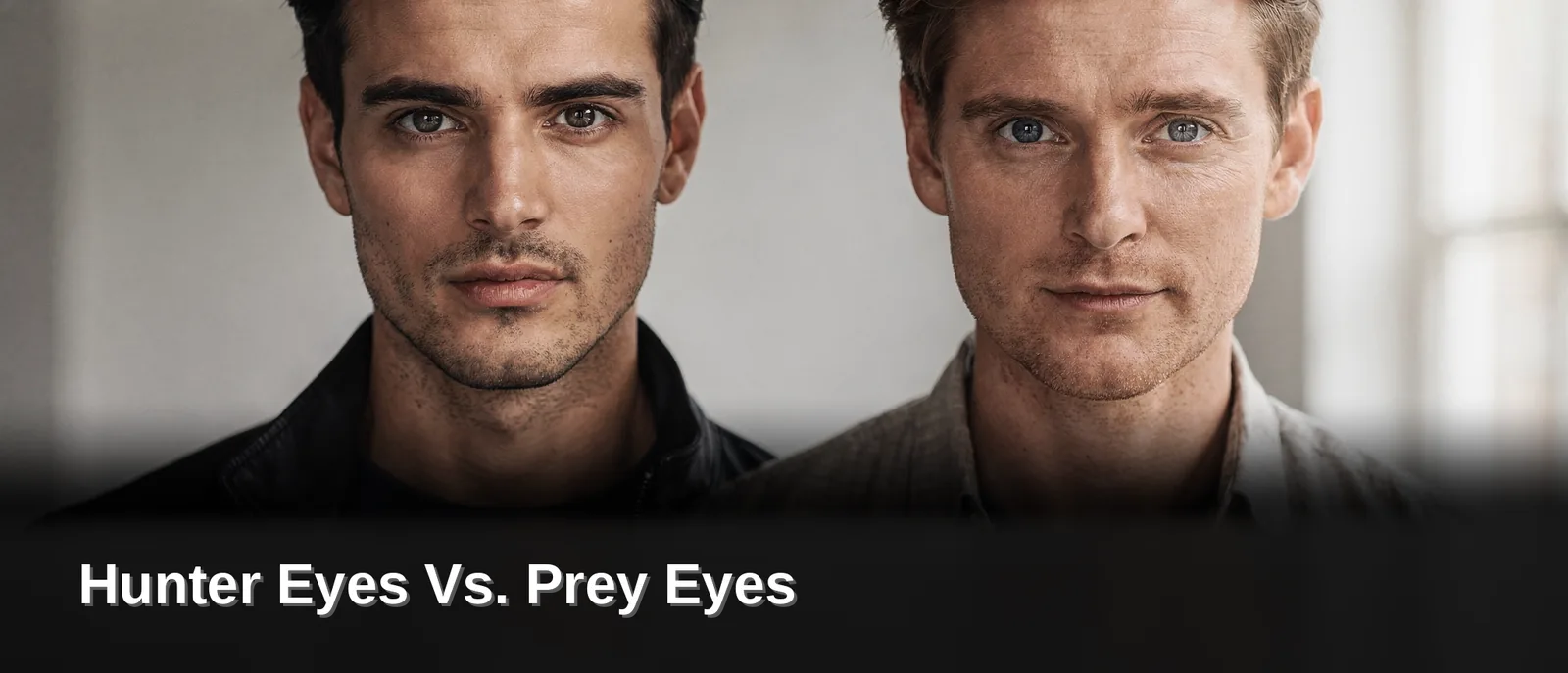
Discover the science behind hunter eyes vs prey eyes, orbital bone support, and canthal tilt. Measure your eye angle with AI facial analysis.
What is your exact canthal tilt in degrees?
Our vision AI detects endocanthion and exocanthion coordinates to calculate your palpebral fissure inclination in degrees in 400ms.
What Exactly Are Hunter Eyes?
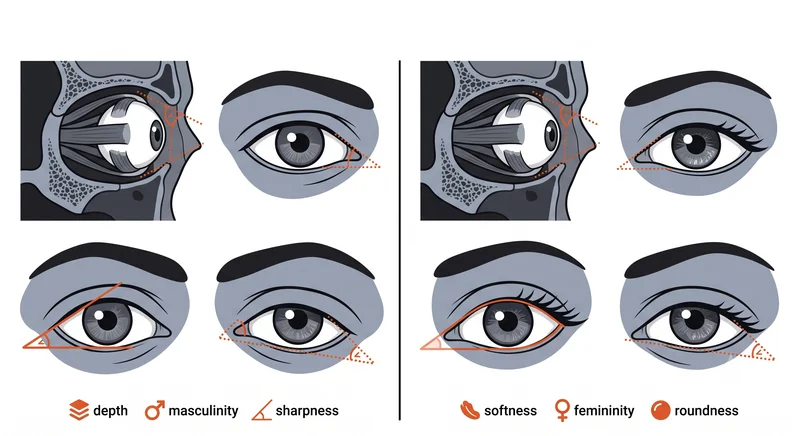
Hunter eyes describe a cluster of eye-area traits that combine into one striking result: a sharp, focused, dominant gaze. Perfect Corp.’s Hunter Eyes: The Ultimate Guide 2026 defines the look this way, noting that no single feature creates the effect alone. Instead, several anatomical elements work together to shape how the eyes read to an observer.
Eye shape, size, and tilt carry real weight in how people are perceived. The Center for Eye and Facial Plastic Surgery notes that these factors shape everything from a person’s expressions to their overall presence. A slight shift in tilt or lid exposure changes the entire impression an eye gives off, from soft and approachable to intense and commanding.
Why Do People Care So Much About This Eye Shape?
Facial features anchor first impressions long before a word gets spoken. Clients curious about their own eye shape are often the same people asking deeper questions about bone structure overall, including jaw angle, cheekbone width, and face shape category. Tools like Detect Face Shape apply that same logic on a broader scale, pairing AI technology with craniofacial anthropometry, the scientific study of facial measurements, to analyze structure with precision rather than guesswork.
Can Facial Scanning Tools Measure Eye-Area Traits Too?
Detect Face Shape lets users upload a photo or start a live camera session, scanning facial proportions in seconds through a 468-point mesh. That same measurement approach, grounded in craniofacial ratios, underlies how traits like canthal tilt get defined and discussed. Understanding the full face shape first gives useful context before zooming into any single feature, including the eyes.
How Do You Run a Canthal Tilt Test?
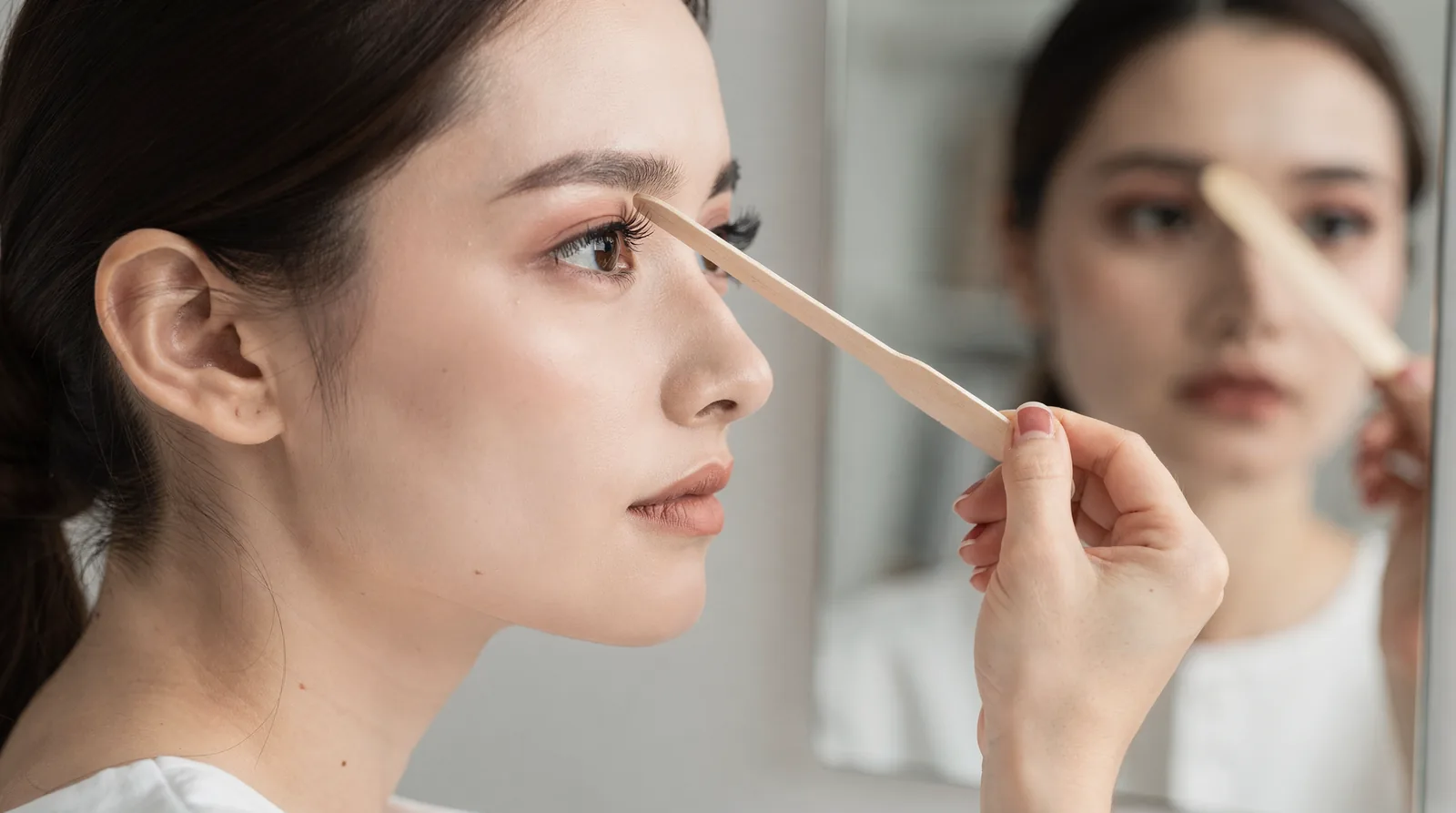
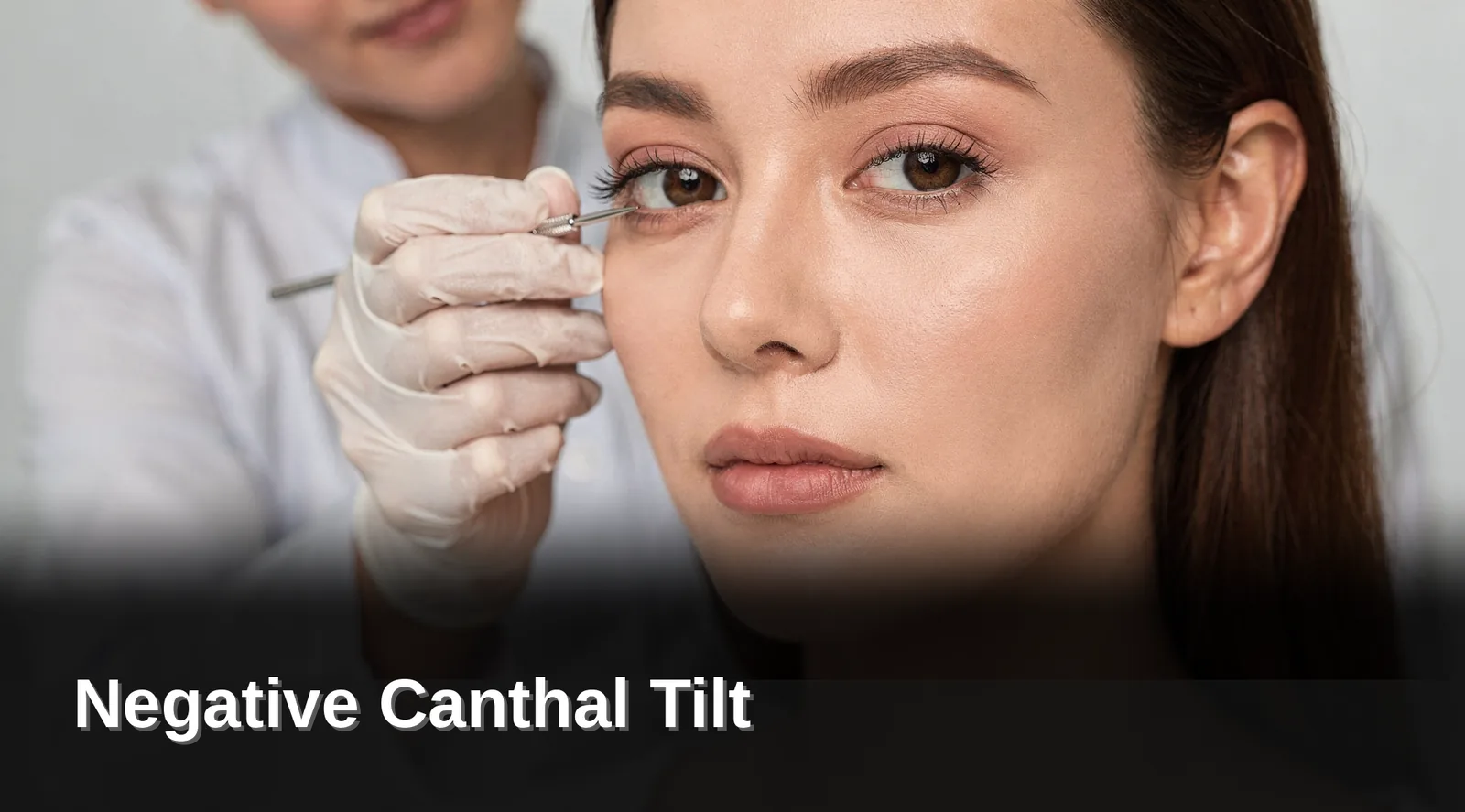
A canthal tilt test starts with a clear, front-facing photo or a live camera scan rather than a guess in the mirror. The goal is simple: measure the angle between the inner and outer corners of the eye to see whether it tilts upward, downward, or stays level. That single angle determines whether someone leans toward hunter eyes or the softer, rounder look known as prey eyes.
Accuracy depends heavily on the tool doing the measuring. A self-check works best with software that processes facial measurements directly on the device, instead of routing images to an outside server for analysis. Many face-analysis tools still require uploading high-resolution photos to a remote cloud server. Unseen systems process and store the images indefinitely. For a casual self-assessment, that tradeoff rarely feels worth it.
Is a canthal tilt test safe to run with a photo?
Safety comes down to where the photo actually goes. Tools built for on-device processing never store or transmit images over the internet, which keeps the self-check private from start to finish.
What does the result actually mean?
A positive canthal tilt means the outer corner sits higher than the inner corner. Results typically fall into a few patterns:
-
Positive tilt: outer corner elevated, associated with the hunter-eyes aesthetic
-
Neutral tilt: corners roughly level
-
Negative tilt: outer corner lower, associated with prey eyes
None of these outcomes ranks one eye shape above another. The hunter eyes vs prey eyes comparison reflects aesthetic preference, not an objective measure of attractiveness.
Hunter Eyes vs Prey Eyes: What’s the Difference?
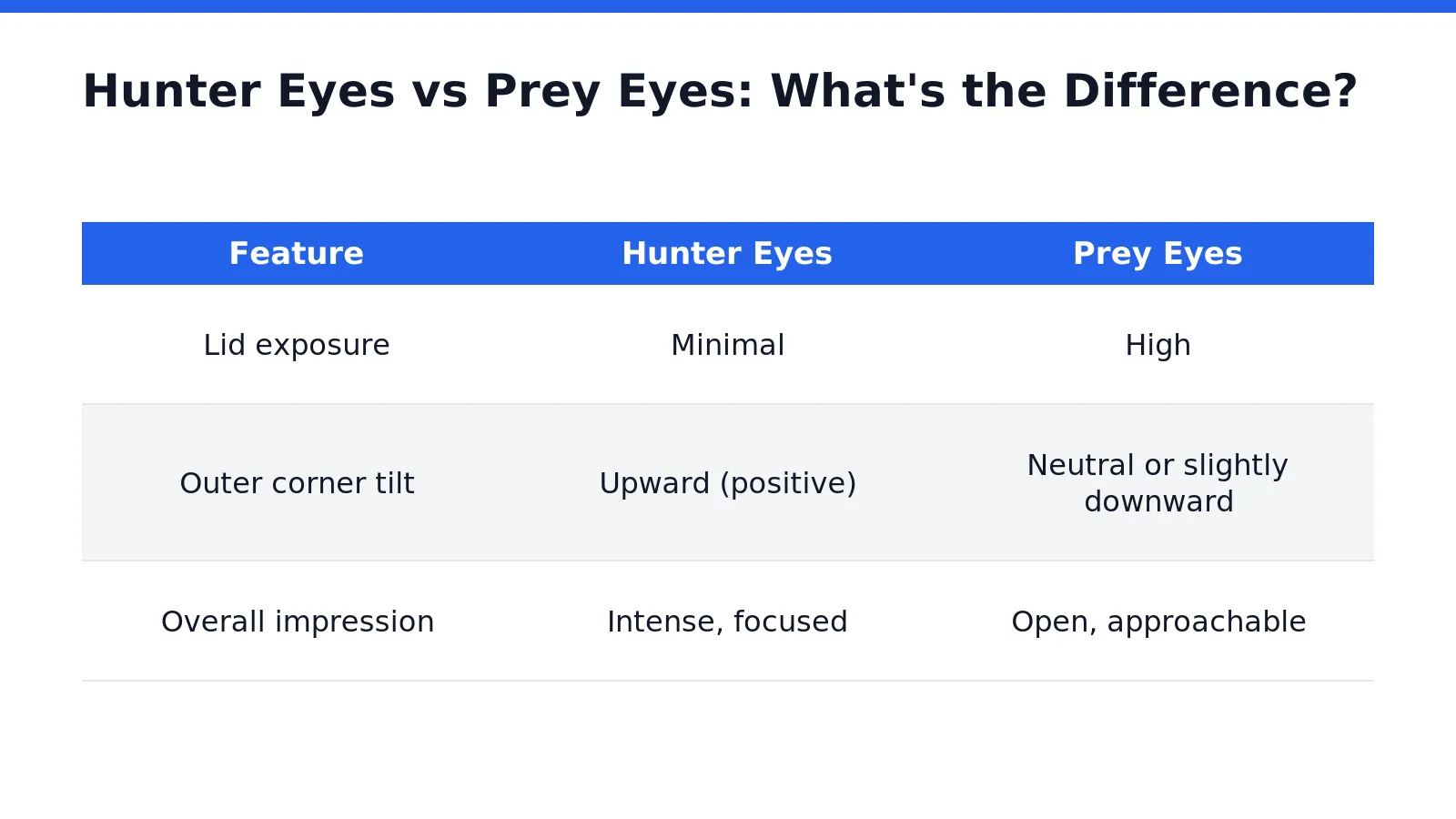
Two eye shapes sit at opposite ends of one spectrum: hunter eyes and their counterpart, prey eyes. The distinction comes down to lid exposure, eye shape, and overall tilt, not better or worse genetics. Hunter eyes read as intense and focused. Prey eyes read as open and approachable. Neither shape outranks the other; the labels describe how light, shadow, and angle interact around the eye socket.
Prey eyes sit at the opposite end of the spectrum from hunter eyes. These eyes tend to be rounder and more open, show more upper eyelid, and carry a neutral or slightly downward tilt at the outer corner. That extra lid exposure is what gives prey eyes their soft, wide-awake look.
Why Do Hunter Eyes Look More Intense?
The impression comes down to gaze and framing, not just anatomy. People with hunter eyes tend to project a sharp, piercing gaze. Those with prey eyes come across as softer and more vulnerable because the eye sits wide open. Neither trait changes eye color or size; it changes how the surrounding structure directs attention.
| Feature | Hunter Eyes | Prey Eyes |
|---|---|---|
| Lid exposure | Minimal | High |
| Outer corner tilt | Upward (positive) | Neutral or slightly downward |
| Overall impression | Intense, focused | Open, approachable |
Eye shape never exists in isolation. Facial bone structure shapes how hunter or prey traits actually present on a given face. Style guides built around a person’s natural proportions, like haircuts, glasses, and grooming recommendations suited to the full facial profile, help bring those eye-area traits into balance with the rest of the look rather than isolating them.
Can You Actually Get Hunter Eyes?
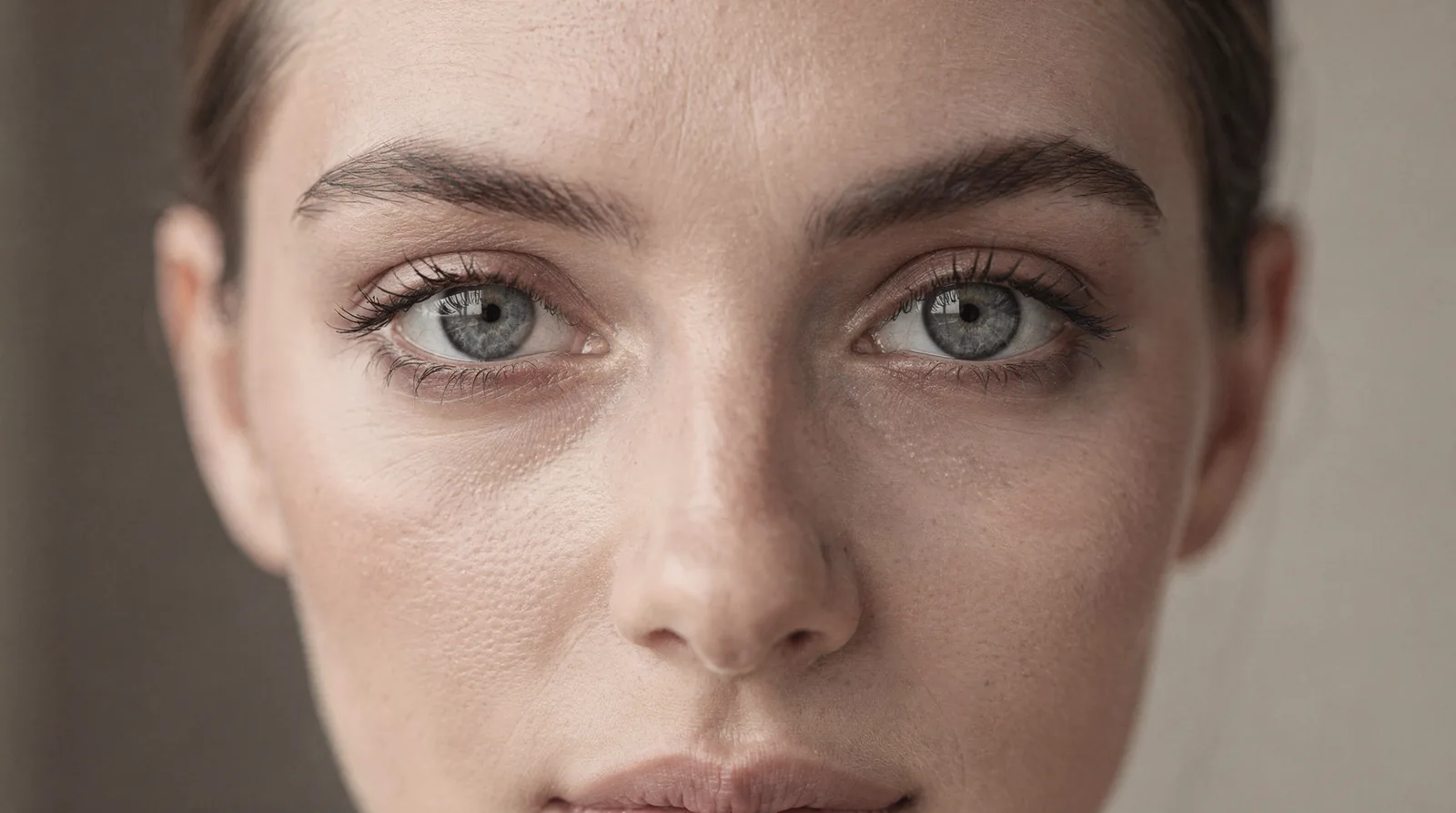
Permanent changes to eye shape require surgery or sustained facial structure work; no cream or exercise routine rewrites bone. Hunter eyes describe a specific combination of brow position, lid exposure, and eye angle. That combination is rooted in skeletal structure more than surface features. Before chasing a trend, understanding the face’s actual proportions matters more than copying a filter.
This is where structural analysis earns its place. Detect Face Shape pairs craniofacial anthropometry, the clinical study of skull and face measurement, with AI technology to map facial proportions with precision. Scanning happens through a photo upload or a live camera session. The underlying bone structure, not just the eye area, shapes what grooming and styling choices will actually look balanced.
Is it safe to analyze eye and face shape online?
Privacy stays protected because the analysis runs entirely on-device. The proprietary AI mesh processes biometric data locally, with no server uploads, so exploring facial structure never means handing over personal images to a stranger’s database.
What should someone check before trying to get hunter eyes?
A straightforward first step for anyone researching how to get hunter eyes: confirm actual face shape and proportions before pursuing an eye trend. The brand’s free, on-device experience makes this accessible:
-
Upload a photo or start a live camera scan
-
Receive instant structural feedback without clinical visits
-
Get personalized guidance that reflects natural bone structure, not generic advice
Trust comes from combining real anthropometric science with a fast, judgment-free process.
Conclusion
In closing, understanding canthal tilt and eye aesthetics starts with recognizing that no single feature exists in isolation. Your eye shape, bone structure, and overall facial proportions work together to create your unique look. Rather than chasing trends that may not align with your natural proportions, exploring your actual face shape through precise structural analysis empowers you to make styling choices that genuinely complement who you are. Knowledge of your own anatomy transforms how you approach beauty decisions, shifting focus from imitation to personalization.
Further Reading
Know Your Exact Face Shape in Seconds
No measuring tape or guesswork needed. Our 468-point AI scans your facial landmarks locally on your device with 100% privacy.
Scan My Face Free →Detect Face Shape Editorial
Biometrics, Craniofacial Anthropometry & Styling Research Team. All recommendations rigorously tested against clinical landmark geometry.