
Golden Ratio Face Calculator: Facial Harmony Guide
Calculate your facial harmony and compact midface ratio with AI landmark precision. Learn how the golden ratio applies to facial aesthetics.
Calculate Your Golden Ratio & Facial Harmony
Scan 468 craniofacial landmarks in 400ms to calculate your vertical thirds, compact midface ratio, and facial symmetry against phi.
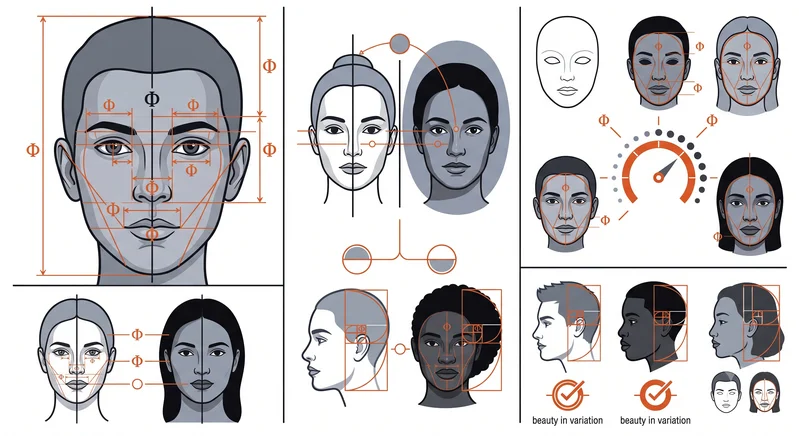
Facial harmony calculations rely on the golden ratio (φ = 1.618), comparing facial width to height, alongside midface ratio, which measures the distance from brow to nose base against nose base to chin. Detect Face Shape’s AI tool maps 468 facial landmarks in-browser, scoring five key proportions instantly without uploading photos to any server.
What Is the Golden Ratio and Why Does It Matter?
The golden ratio, written as phi and equal to roughly 1.618, has defined visual balance in art and nature for centuries. Facial beauty research borrowed this same number to explain why certain proportions read as harmonious. Losing sight of that number means losing a useful, measurable benchmark for comparing facial symmetry instead of guessing by eye.
Phi did not start in biology labs. During the European Renaissance, painters and architects relied on the golden ratio to plan paintings, sculptures, and buildings long before scientists turned the formula toward the human face. That history matters because it shows the ratio isn’t a beauty-industry invention. It’s a mathematical pattern humans have used to judge proportion for generations.
What counts as a golden ratio face?
A golden ratio face is one whose measurements line up closely with phi, most famously a face that measures about 1.618 times longer than it is wide. Faces rarely hit that number exactly, but the closer the proportions sit to 1.618, the more balanced the face tends to appear in facial-harmony scoring.
How does a golden ratio face calculator apply this idea?
A golden ratio face calculator takes a photo and measures key facial distances against phi automatically. Detect Face Shape builds on this concept by pairing AI technology with craniofacial anthropometry, the scientific study of head and face measurements, to deliver a precise analysis.
| Approach | Basis |
|---|---|
| Traditional golden ratio scoring | Single length-to-width comparison |
| Craniofacial anthropometry | Multiple bone-structure ratios |
Either method turns subjective impressions of beauty into a repeatable, evidence-based measurement a smartphone camera can capture in seconds.

How Does a Golden Ratio Face Calculator Work?
A golden ratio face calculator scans a photo or live camera feed and maps 468 facial landmarks across the brow, cheeks, nose, and jawline. This landmark grid produces an instant ratio score within seconds, measuring five key proportions against the mathematical constant long used to describe visual balance. Detect Face Shape applies a similar approach: uploading a photo or starting a live camera session lets the scan calculate precise facial proportions without a lengthy wait.
The technology behind a modern facial ratio calculator differs sharply from older face-detection software. Many earlier tools relied on simple bounding boxes, flat rectangles drawn around a face. That shortcut often misclassified a strong, angular jaw as round, since a box cannot capture curvature or depth. A 468-point mesh solves this problem differently. It tracks discrete 3D spatial points and computes anthropometric ratios directly from the screen, rather than guessing from a flat outline.
What does the midface ratio measure?
The midface ratio compares the vertical distance from the brow to the base of the nose against cheekbone width. A compact midface, where that distance runs short relative to cheekbone width, tends to read as balanced and proportionate in harmony scoring. This measurement is one of the five core proportions a landmark-based scan evaluates.
Why does landmark density matter for accuracy?
More landmarks mean finer detail. A 468-point mesh captures jaw angle, cheekbone width, and facial length with enough precision to avoid the bounding-box errors that plague simpler tools. Fewer points force a system to approximate; more points let it measure.
For anyone comparing a personal golden ratio face score against the classic 1.618 benchmark, that precision decides whether the result reflects real bone structure or a rough guess built on a crude rectangle.
What Is the Midface Ratio and Compact Midface?
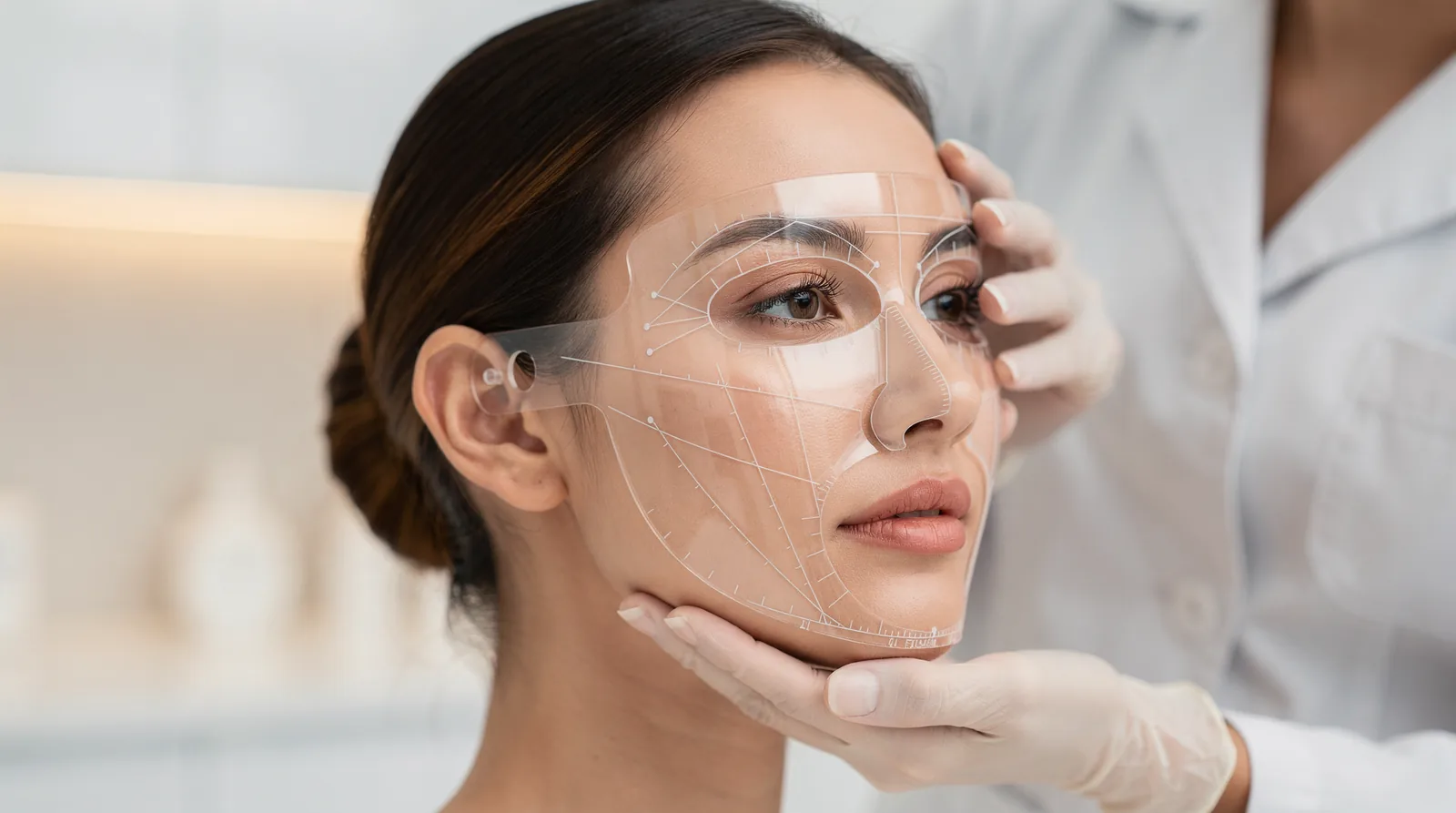
Midface ratio measures the middle third of the face, the zone between the eyes and the mouth, against surrounding facial landmarks. A compact midface describes a shorter-than-average distance in this zone, a proportion linked to youthful, balanced features in facial aesthetics research.
Facial harmony analysis breaks the face into measurable sections rather than vague impressions. One core comparison looks at the upper face, from forehead to nose bridge, against the lower face, from nose bridge to chin. A separate proportion measures the spacing between the eyes against the width of the mouth, which forms a key midface relationship. Together these measurements explain why two faces with similar individual features can still read as differently balanced.
Modern tools built as a facial ratio calculator rely on precise landmark tracking instead of guesswork. Detect Face Shape’s AI mesh calculates the trichion-to-menton vertical facial length axis, the line running from hairline to chin, which anchors every midface measurement that follows. The same system tracks zygomatic cheekbone width in real time, forming the horizontal boundary used in midface ratio math. Pairing that vertical axis with cheekbone width gives a golden ratio face calculator the two reference lines needed to isolate the midface zone and judge compactness.
What Does a Compact Midface Look Like?
A compact midface shows shorter spacing between the eyes and mouth relative to overall face height. This proportion often pairs with a shorter forehead-to-nose-bridge segment, producing a tighter, more condensed central third of the face.
How Is the Midface Ratio Calculated?
Calculating this ratio starts with locating the hairline, cheekbone edges, and chin point. A golden ratio face analysis then compares vertical and horizontal distances between these landmarks, measuring the result against classical proportion standards used across facial aesthetics research.
Which Facial Ratios Make Up Your Harmony Score?
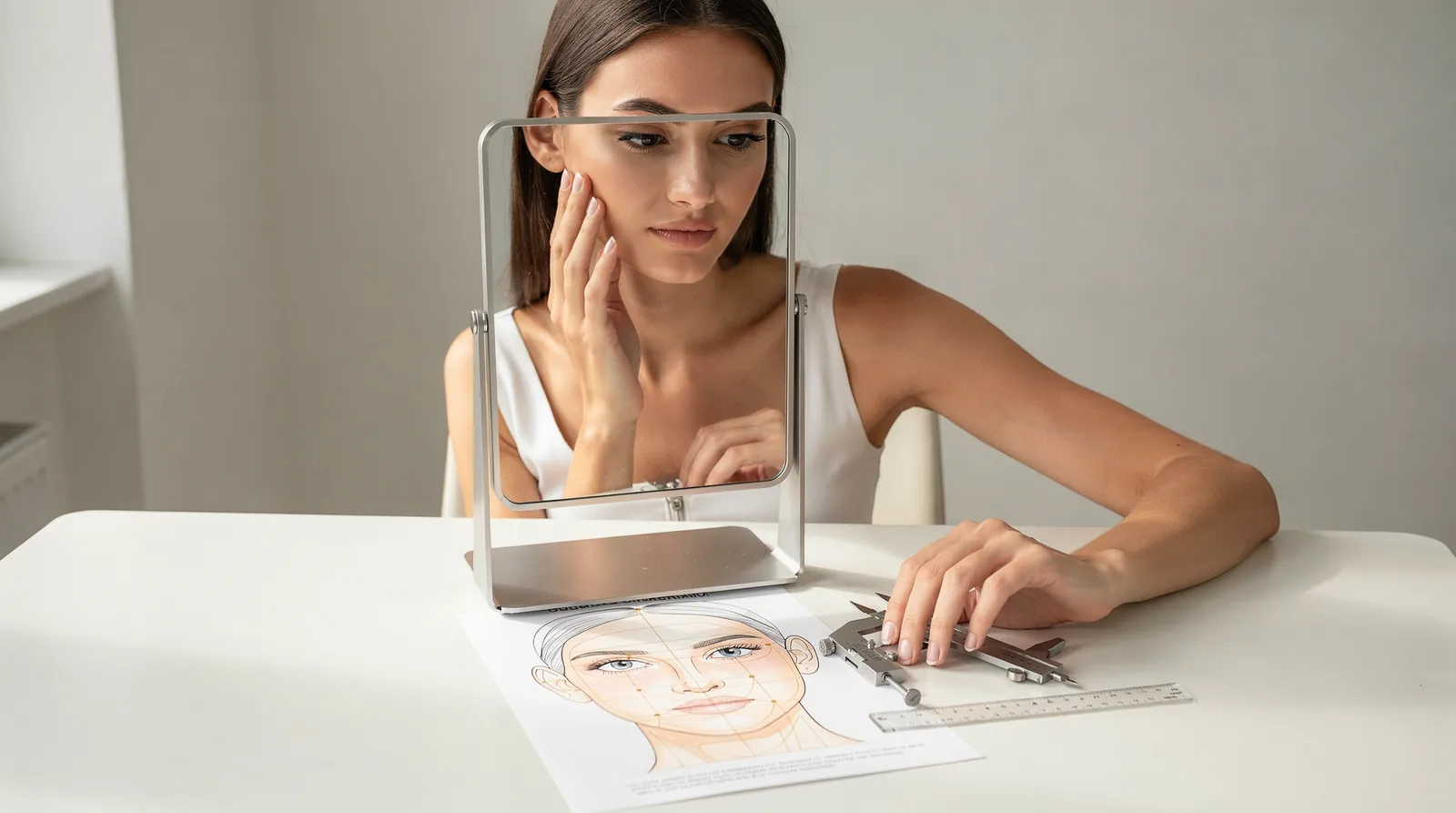
Five measured proportions form the backbone of a harmony score, each checked against phi, the golden ratio of 1.618. A golden ratio face calculator scans a photo for 468 landmarks, then compares facial segments to that constant. Strong alignment across all five proportions produces what’s often called a golden ratio face, a profile that reads as balanced rather than dominated by one standout feature.
Some calculators simplify this further. Instead of displaying five raw figures, the system averages them into a single score and breaks the result into three key facial ratios: facial thirds, width-to-height, and the midface ratio. This streamlined output spares a user from parsing five separate numbers at once.
What counts as a compact midface?
A compact midface describes a shorter distance between the brow line and the base of the nose, relative to the rest of the face. This proportion shifts how balanced a profile appears in photos and in person. Faces with a tighter midface often read as more youthful. The ratio shortens visual distance between the eyes and nose.
How does a facial ratio calculator relate to face shape?
A facial ratio calculator measures proportion. Face shape analysis, by contrast, sorts bone structure into a category. Seven distinct face shapes exist, and each one ties to a measurable set of ratios rather than a subjective guess.
Because every classification rests on scientifically measured proportions, results stay consistent between scans. Each shape then unlocks a style guide matched to that specific profile, turning raw ratio numbers into practical grooming and styling direction.
How Can You Calculate Your Own Facial Proportions?
Measuring facial proportions takes one of two paths: an automated scan or a manual tape-measure method. Precise anthropometric analysis reveals whether cheekbone width, jaw curve, and facial length line up with recognized shape categories. Either path gets there without special training.
For the digital route, a facial ratio calculator built on craniofacial anthropometry turns a photo or live camera feed into a proportion reading in seconds:
-
Upload an existing photo, or open a live camera session for a real-time scan.
-
Let the engine map facial landmarks and compute width-to-length ratios automatically.
-
Review results covering jaw angle, cheekbone span, and overall facial length.
Processing happens entirely on-device, using WebAssembly and WebGL instead of a remote server. No photo gets stored or transmitted anywhere, so the entire proportion check stays private from start to finish. That architecture has already supported more than 350,000 scans, with strong user satisfaction backing its accuracy.
Can Proportions Be Measured Without a Camera?
Yes. The classic 4-step Farkas craniofacial formula offers a manual alternative using only a flexible tape measure or ruler. It calculates the same core relationships, including the midface ratio between brow, nose base, and chin, by hand rather than through a lens.
What Does a Compact Midface Mean for Face Shape?
A compact midface describes a shorter middle third relative to the forehead and jaw, a pattern that shifts shape classification. Whether someone leans toward a golden ratio face calculator style symmetry score or a straightforward golden ratio face comparison, the measurement goal stays the same: matching bone structure to styling choices that actually fit it.
Conclusion
In closing, understanding your facial proportions transforms abstract beauty standards into actionable insights tailored to your unique bone structure. Whether you measure through advanced AI technology or classical anthropometry, the goal remains consistent: discovering how your face’s individual ratios create harmony and balance. Armed with this knowledge, you gain the foundation to make styling choices, from haircuts to frames, that genuinely complement your natural features rather than fighting against them. Personal preference always guides your final decisions, but now those choices rest on a foundation of measured, personalized understanding.
अक्सर पूछे जाने वाले प्रश्न
What is a good golden ratio face score?
A golden ratio face score reflects how closely facial measurements align with phi (roughly 1.618). Scores that land close to it across the five measured proportions generally read as balanced in facial harmony scoring.
Is a golden ratio face calculator accurate?
Accuracy depends on landmark density. Tools that map hundreds of 3D facial landmarks directly provide results grounded in real bone structure rather than rough 2D box approximations.
Does a compact midface mean a more attractive face?
A compact midface, where distance between brow and nose base is short relative to cheekbone width, contributes to youthful facial balance.
Can I measure my facial ratios without an app?
Yes, using the classic Farkas craniofacial formula with a flexible tape measure or caliper, though automated scans calculate this instantly.
Is it safe to upload a photo to a golden ratio face calculator?
Detect Face Shape processes scans entirely on-device using WebAssembly and WebGL, meaning no photo is uploaded or stored on any server.
संबंधित लेख
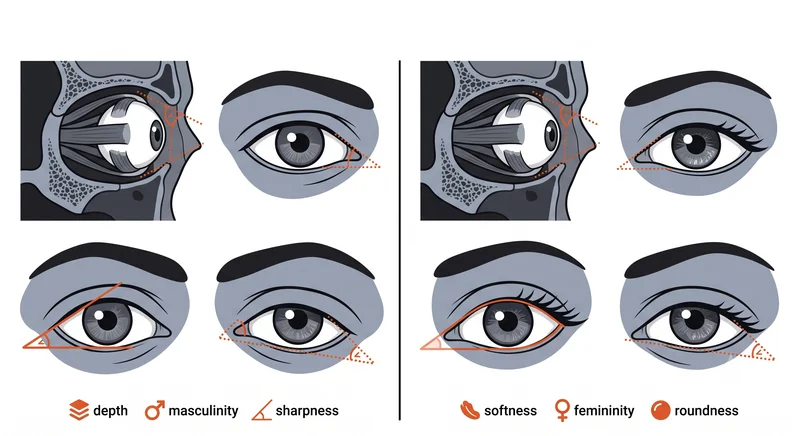
कुछ ही सेकंड में अपने चेहरे का सटीक आकार जानें
किसी फीते या अनुमान की जरूरत नहीं। हमारा 468-पॉइंट AI आपके डिवाइस पर स्थानीय रूप से चेहरे का विश्लेषण करता है।
मुफ्त में चेहरा स्कैन करें →Detect Face Shape संपादकीय टीम
बायोमेट्रिक्स, कपालीय मानवमिति और स्टाइलिंग अनुसंधान टीम। सभी सिफारिशें चिकित्सकीय ज्यामिति पर आधारित हैं।