
Negative vs. Positive Canthal Tilt: How Eye Angle Shapes Facial Aesthetics
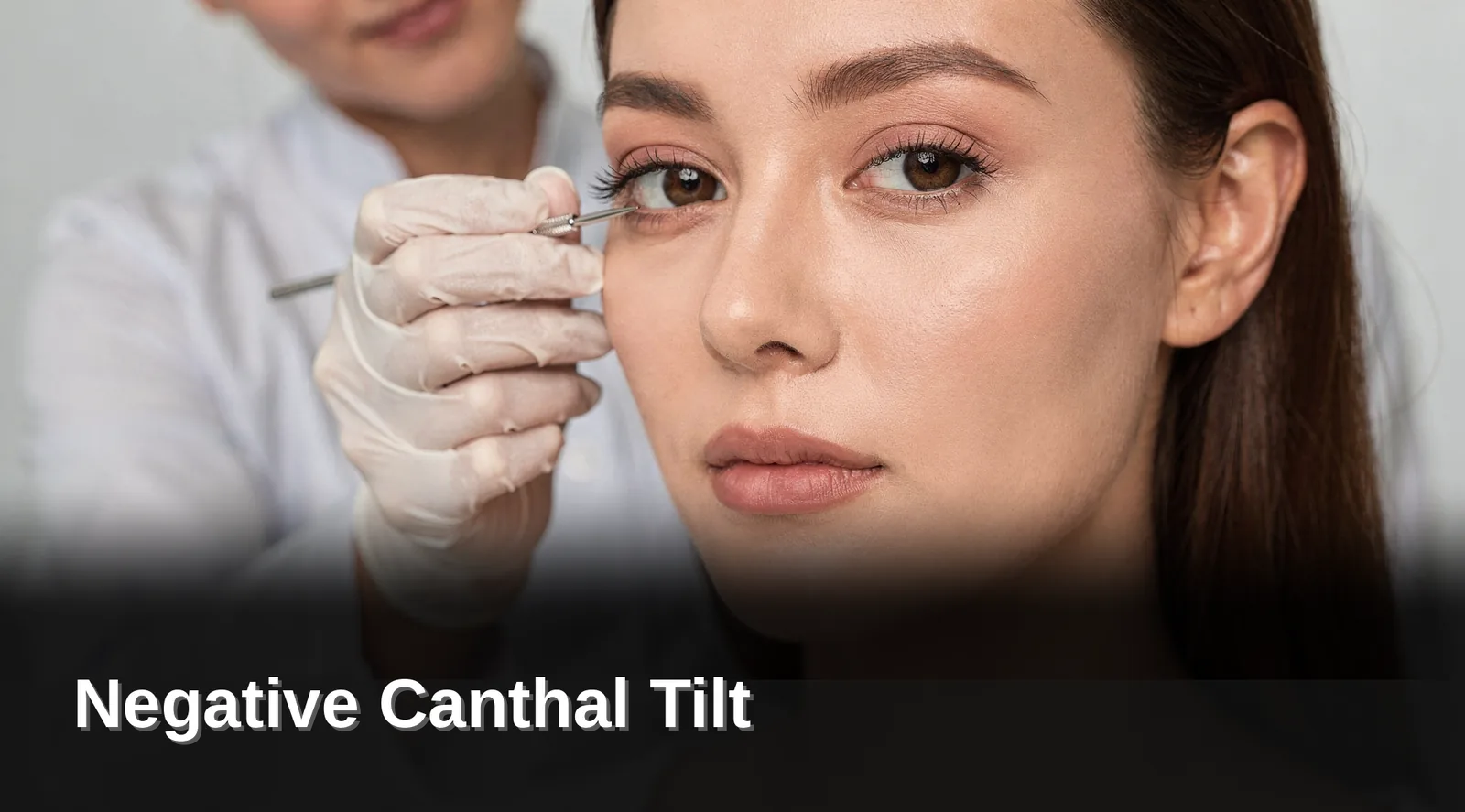
Explore how negative canthal tilt shapes facial aesthetics. Measure eye angles and discover personalized styling insights with AI facial analysis.
What is your exact canthal tilt in degrees?
Our vision AI detects endocanthion and exocanthion coordinates to calculate your palpebral fissure inclination in degrees in 400ms.
Positive canthal tilt lifts the outer eye corner upward, creating an alert, upswept appearance. Negative tilt drops it downward for a softer, rounder look. Measuring the angle between inner and outer corners reveals which type applies; pairing that insight with a 468-point facial mesh analysis clarifies how eye shape influences overall face shape and styling choices.
What Is Canthal Tilt and Why Does It Matter?
Canthal tilt describes the angle between the inner corner of the eye and the outer corner, measured along an imaginary horizontal reference line connecting the two points. That single angle does more to shape a face’s first impression than most people realize.
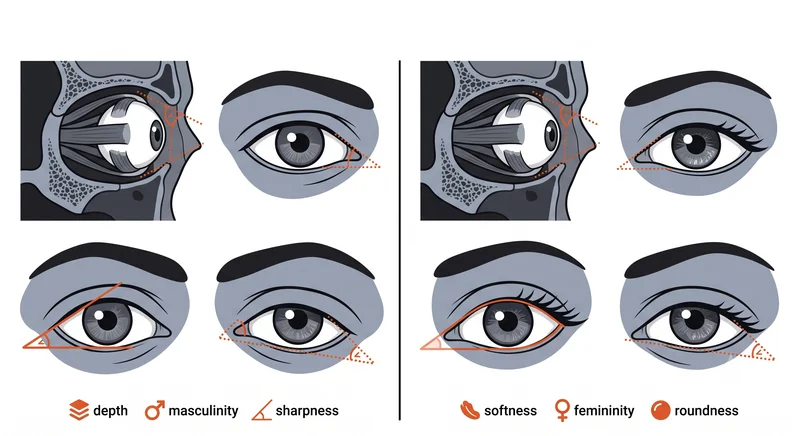
- Positive canthal tilt: Occurs when the outer corner sits higher than the inner corner, creating an alert, sharp appearance.
- Negative canthal tilt: Occurs when the outer corner drops lower, producing a softer, gentler, or relaxed expression.
- Neutral tilt: Both corners sit level along the horizontal axis.
Eye shape doesn’t exist in isolation; it sits inside a person’s overall bone structure alongside jawline width, cheekbones, and facial length. You can evaluate your complete facial proportions using our free, on-device AI Face Shape Detector.
How Can Someone Check Their Own Canthal Tilt?
A simple canthal tilt test involves looking at a straight-on photo and drawing a line from the inner corner of the eye to the outer corner. Checking whether that line points upward, downward, or level reveals which category applies.
Many people search for this test due to the “hunter eyes” aesthetic—a popular description for an upward-angled, sharp positive tilt with strong brow support.
What Do You Need Before Testing Your Tilt?

Two simple paths exist for measuring eye angle: a photo upload or a live camera session. Before checking your tilt:
- Find even lighting: Face a window or lamp to eliminate shadow distortion around the eye corners.
- Clear the face: Pull hair back from your forehead and temples.
- Remove glasses: Eyewear frames obstruct natural lateral canthus positioning.
- Camera at eye level: Face the camera straight-on without tilting your chin.
- Neutral expression: Avoid squinting or smiling, which artificially elevates the outer eye corner.
Privacy Note: On-device diagnostic tools run all computer vision models locally inside your browser memory with zero server uploads. Photos are processed temporarily and immediately discarded.
How Do You Measure Your Canthal Tilt Step by Step?
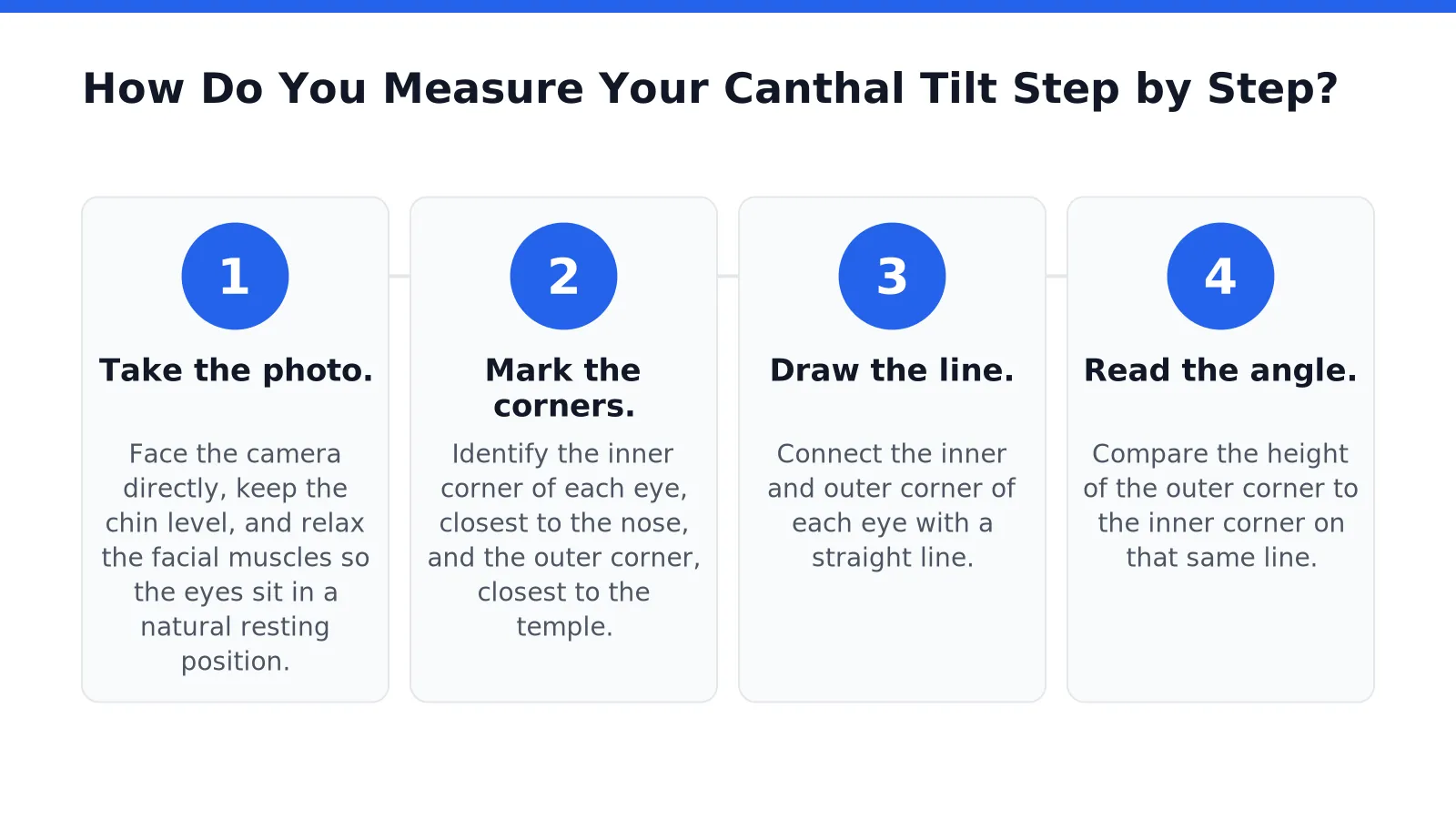
- Take the photo: Face the camera directly, keep your chin level, and relax facial muscles.
- Mark the corners: Identify the inner corner (medial canthus) closest to the nose and outer corner (lateral canthus) closest to the temple.
- Draw the line: Connect the inner and outer corners with a straight line.
- Read the angle: Compare the height of the outer corner relative to the inner corner along that horizontal axis.
Point-based facial mapping tracking hundreds of landmarks reduces margin of error compared to standard bounding boxes, measuring exact proportions rather than rough estimates.
What Do Hunter Eyes Have to Do With Canthal Tilt?
“Hunter eyes” describe a sharp, upward-angled eye shape commonly linked to a pronounced positive canthal tilt combined with compact vertical palpebral fissure height and hooded upper eyelids. The underlying biomechanical test remains identical: measuring lateral vs. medial corner elevation.
Interpreting Positive, Negative, and Neutral Tilt
Neither tilt is inherently superior; each shifts how the orbital region harmonizes with facial bones:
- Positive canthal tilt: Reads as intense, sharp, and focused. Eyebrow shaping with soft arches and structured frames complement this profile.
- Negative canthal tilt: Reads as approachable, warm, and relaxed. Often paired with upward-slanted brow grooming or frames that elevate the upper visual perimeter.
Face Shape Interaction
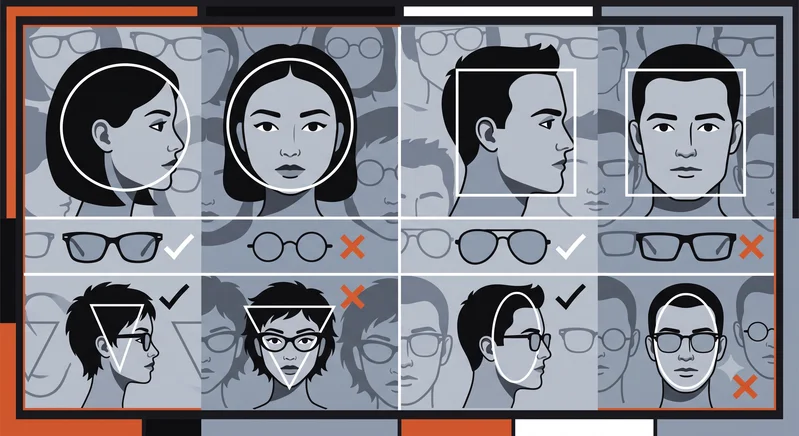
- Oval, round, or square shapes: Tilt direction shifts how brows and glasses frames balance facial width.
- Heart or diamond shapes: Cheekbone width interacts with eye angle to define midface sharpness.
- Oblong or triangle shapes: Jawline proportions matter alongside tilt when selecting hairstyles.
Conclusion
Understanding your canthal tilt transforms eye-angle awareness into actionable grooming and styling decisions. Pairing your tilt reading with your broader facial structure unlocks tailored advice that works in harmony with your natural bone structure.
Рекомендуем прочитать
Определите точную форму лица за считанные секунды
Без рулетки и догадок. Наш ИИ с 468 точками сканирует параметры лица прямо в браузере без загрузки на сервер.
Сканировать лицо бесплатно →Редакция Detect Face Shape
Исследовательская группа по биометрии, краниофациальной антропометрии и персональному стилю.