
The Master Guide to Choosing Glasses for Your Face Shape
"The Optical Contrast Rule Behind Every Flattering Frame — Stop Guessing at the Optometrist"
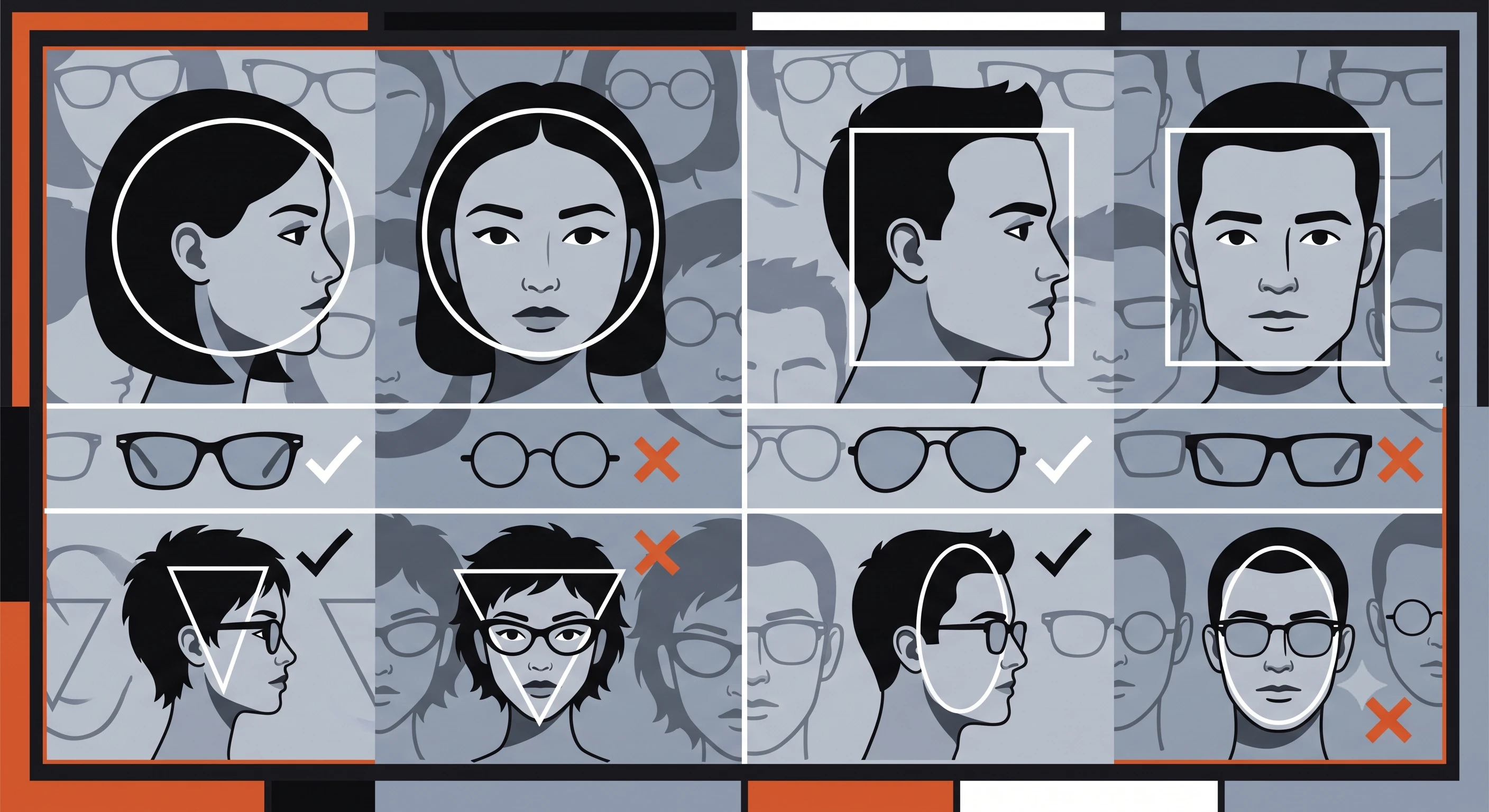
The definitive guide to finding the best eyeglasses and sunglasses for your face shape. Optical contrast principles, bridge measurements, and frame proportions.
"Your glasses should never duplicate the shape of your face. If your face is round, your frames must be angular. If your face is angular, your frames must be curved. Contrast is balance."
Want to see frame styles on your face?
Upload a selfie or turn on your camera to test glasses frames calibrated to your exact biometric landmark points.
The Three Universal Laws of Eyewear Fitting
Before worrying about color or brand, every successful frame selection hinges on three non-negotiable architectural rules:
The 3 Non-Negotiable Fitting Laws:
- 1. The Width Law (Temporal Alignment): The total width of your frame should match the widest part of your face (your cheekbones). If frames extend past your temples, your head appears pinched; if they are narrower, your face looks bloated.
- 2. The Eye Centering Law (Pupillary Height): Your pupils should sit directly in the horizontal center and within the top third vertically of each lens aperture. Severe decentration ruins both vision optics and aesthetics.
- 3. The Eyebrow Rule: The top rim of your frames should echo the curve of your natural eyebrow without completely concealing it or rising above it into your forehead.
The Perfect Frame Matches for All 7 Face Shapes
Match your biometric face shape with its corresponding optical counterweight below:
Round Face Shape
Recommended: Sharp Rectangles, Square Wayfarers & D-Frames
Straight browlines and 90-degree frame corners introduce structure, visually slimming round cheeks and creating vertical lift.
The goal: Add crisp angular contrast to soft circular contours.
Common mistake: Circular John Lennon-style round wire glasses that exaggerate circularity.
Square Face Shape
Recommended: Round, Oval & Soft Curved Wire Frames
Curved acetate or titanium frames soften authoritative gonial jaw angles and balance prominent temple widths.
The goal: Softening strong masculine/feminine jawlines.
Common mistake: Boxy, thick rectangular frames that make the head appear blocky.
Oblong Face Shape
Recommended: Deep Aviators & Oversized Squares
Frames with tall vertical lens height (deep B-measurement) dissect long facial midsections into balanced neoclassical thirds.
The goal: Cut vertical length in half with deep lens geometry.
Common mistake: Narrow horizontal reading glasses that leave huge expanses of cheeks exposed.
Heart & Inverted Triangle Shapes
Recommended: Browlines, Light Metal & Bottom-Heavy Ovals
Frames with subtle lower rims or light titanium builds prevent adding top-heavy bulk to broad foreheads.
The goal: Balance a wide upper third without overwhelming the chin.
Common mistake: Heavy dark acetate frames with oversized decorative temple wings.
Diamond Face Shape
Recommended: Cat-Eye, Oval & Clubmaster Browlines
Frames that lift at the corners widen the narrow upper temples while allowing dramatic high cheekbones to shine.
The goal: Broaden narrow temples and highlight zygomatic cheek arches.
Common mistake: Narrow rectangular frames that sit completely inside the cheekbone line.
Oval Face Shape
Recommended: Any Frame with Proportional Width
Because oval faces possess balanced proportions, virtually any frame silhouette works. Ensure the frame matches cheekbone width.
The goal: Preserve natural neoclassical equilibrium.
Common mistake: Choosing frames that are significantly wider than the face.
Frequently Asked Questions
How do I know my frame size numbers?
Check the inside temple arm of an existing well-fitting pair. You will see three numbers (e.g. 52-18-140): lens width in mm, bridge width in mm, and temple arm length in mm.
Do nose bridges affect how long your nose looks?
Yes! A high, thin bridge visually elongates the nose, which is great for shorter faces. A low, dark, or keyhole bridge visually shortens the nose, which is ideal for long or oblong faces.
Optical recommendations derived from ophthalmic dispensing standards and 468-point spatial pupillary alignment. Last updated September 28, 2026.
Further Reading
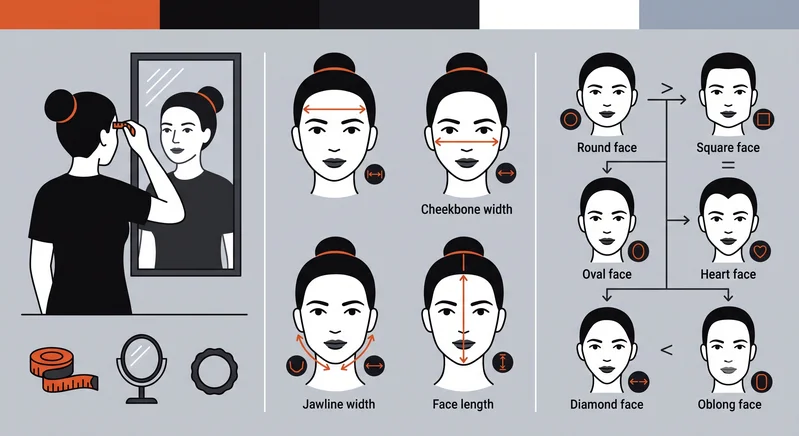
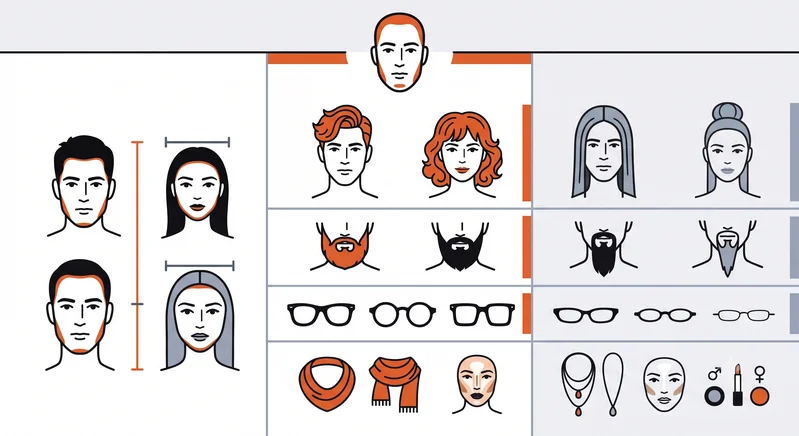
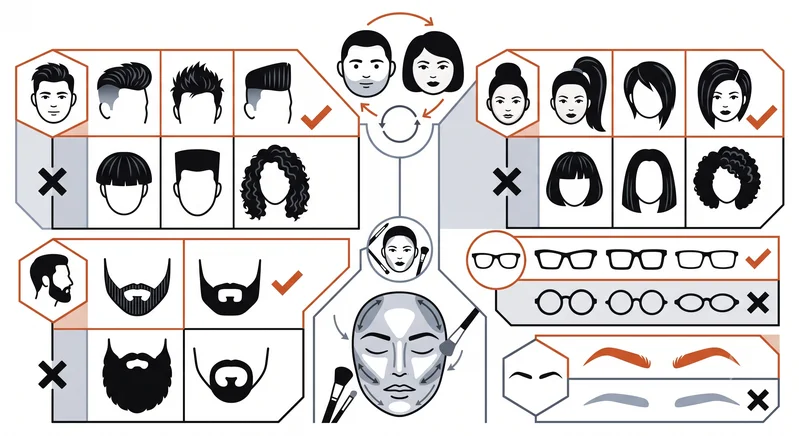
Know Your Exact Face Shape in Seconds
No measuring tape or guesswork needed. Our 468-point AI scans your facial landmarks locally on your device with 100% privacy.
Scan My Face Free →Detect Face Shape Editorial
Biometrics, Craniofacial Anthropometry & Styling Research Team. All recommendations rigorously tested against clinical landmark geometry.