
All 7 Face Shapes Explained
Understand the anthropometric ratios, bone structure signatures, and styling rules for each of the seven human craniofacial geometries.
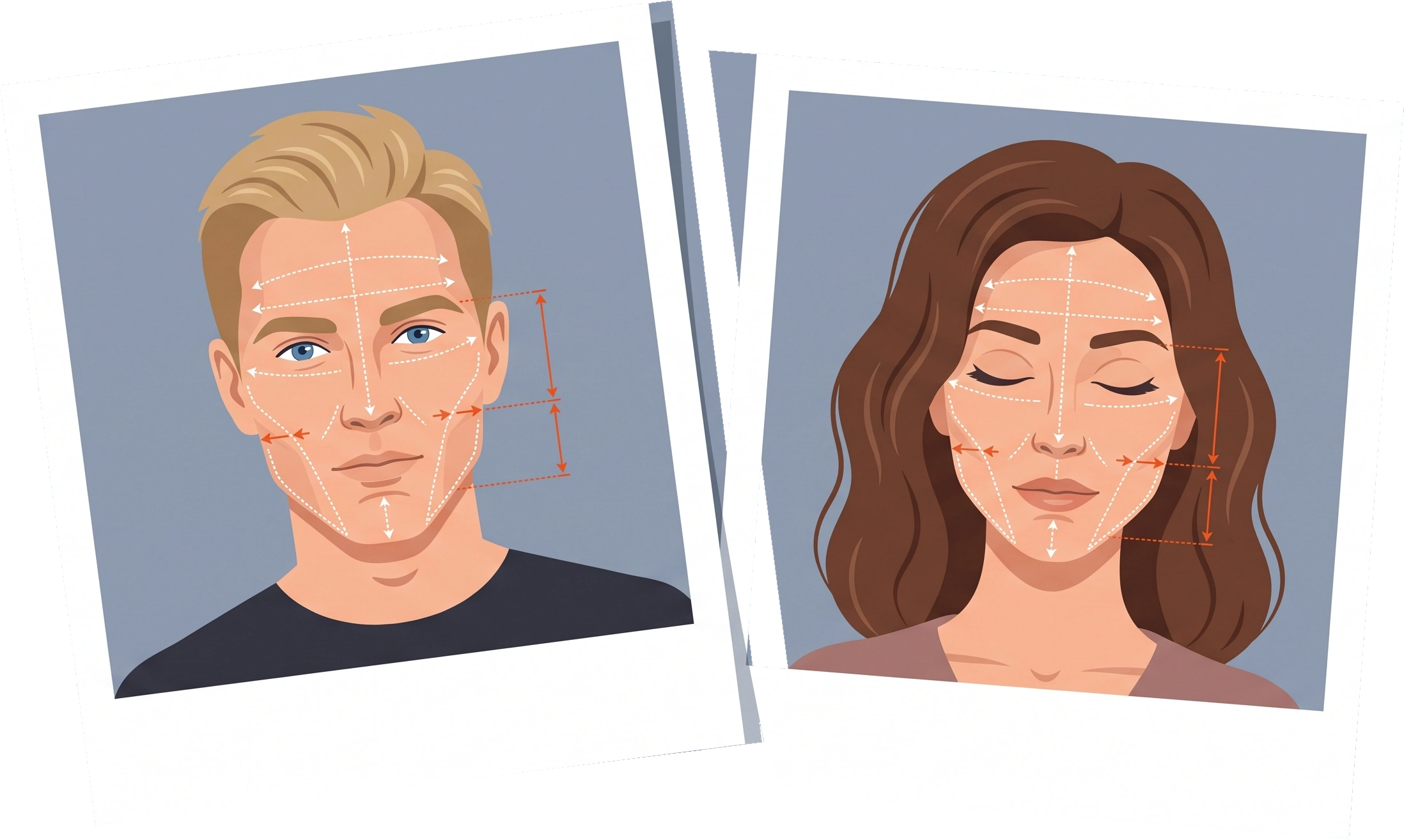
Diamond Face Shape
High cheekbones with a narrow forehead and jawline.
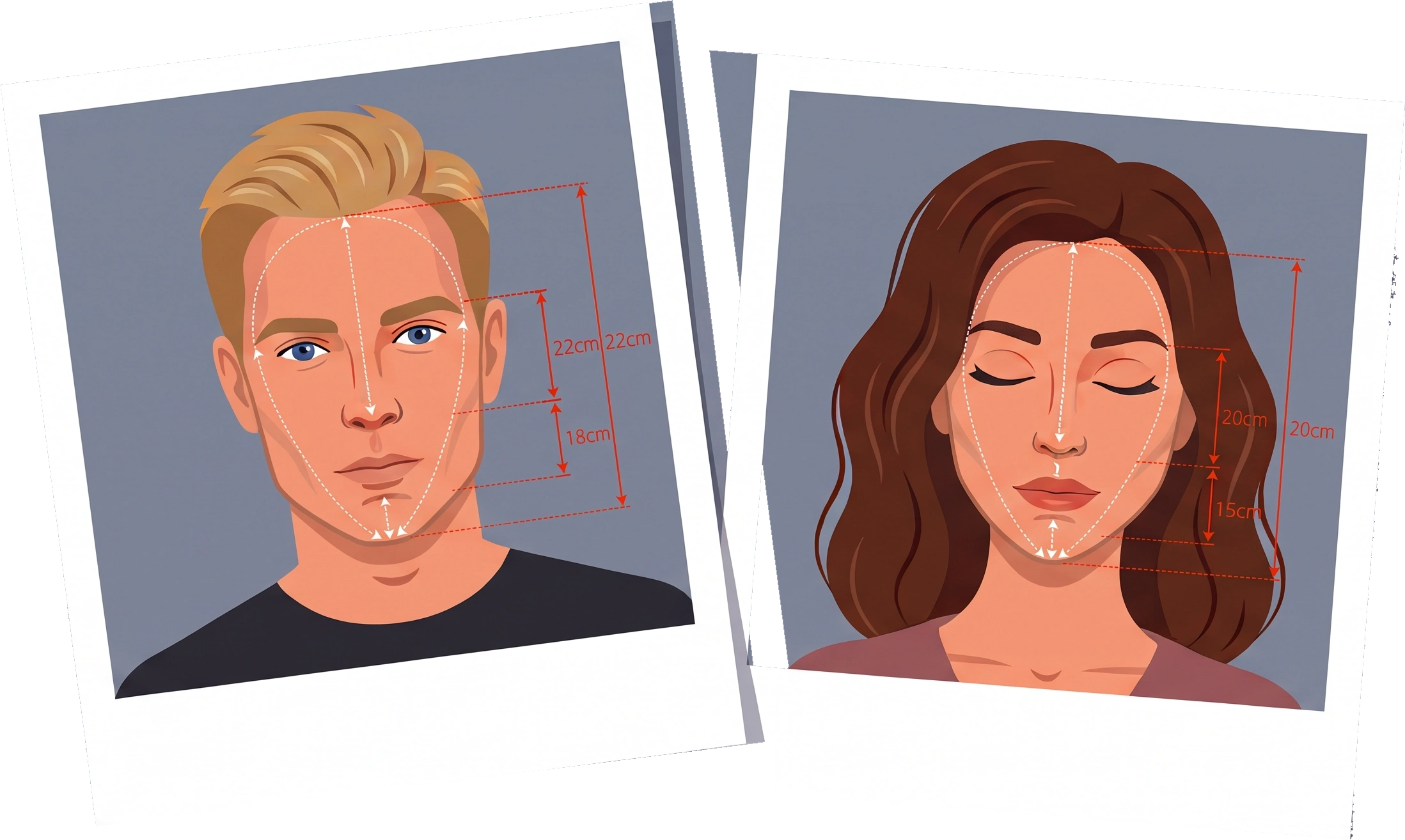
Oval Face Shape
Balanced proportions, softly curved jawline, forehead slightly wider than jaw.
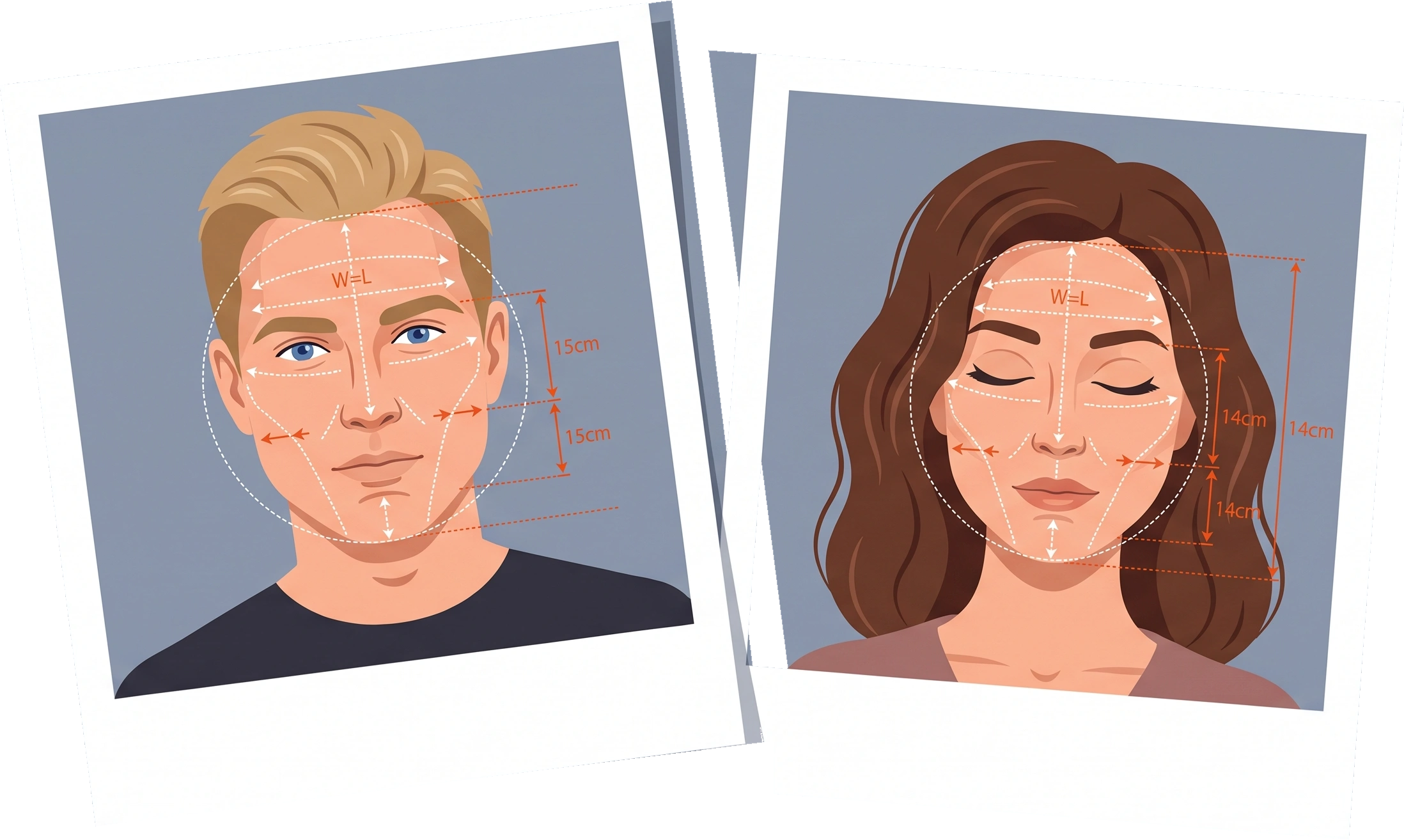
Round Face Shape
Soft curves with nearly equal width and length and full cheeks.
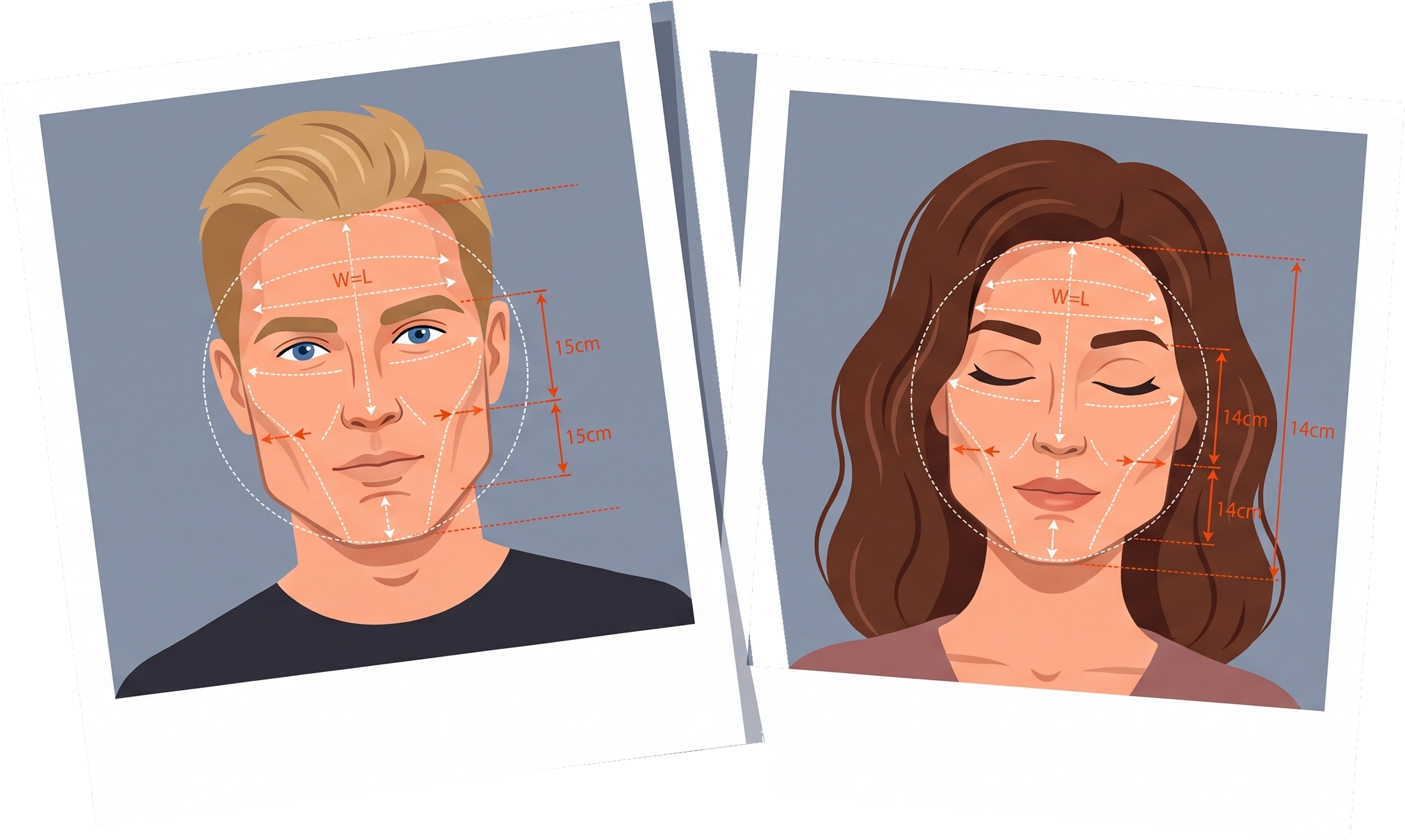
Square Face Shape
Bold, sharp angular jawline and equal width proportions.
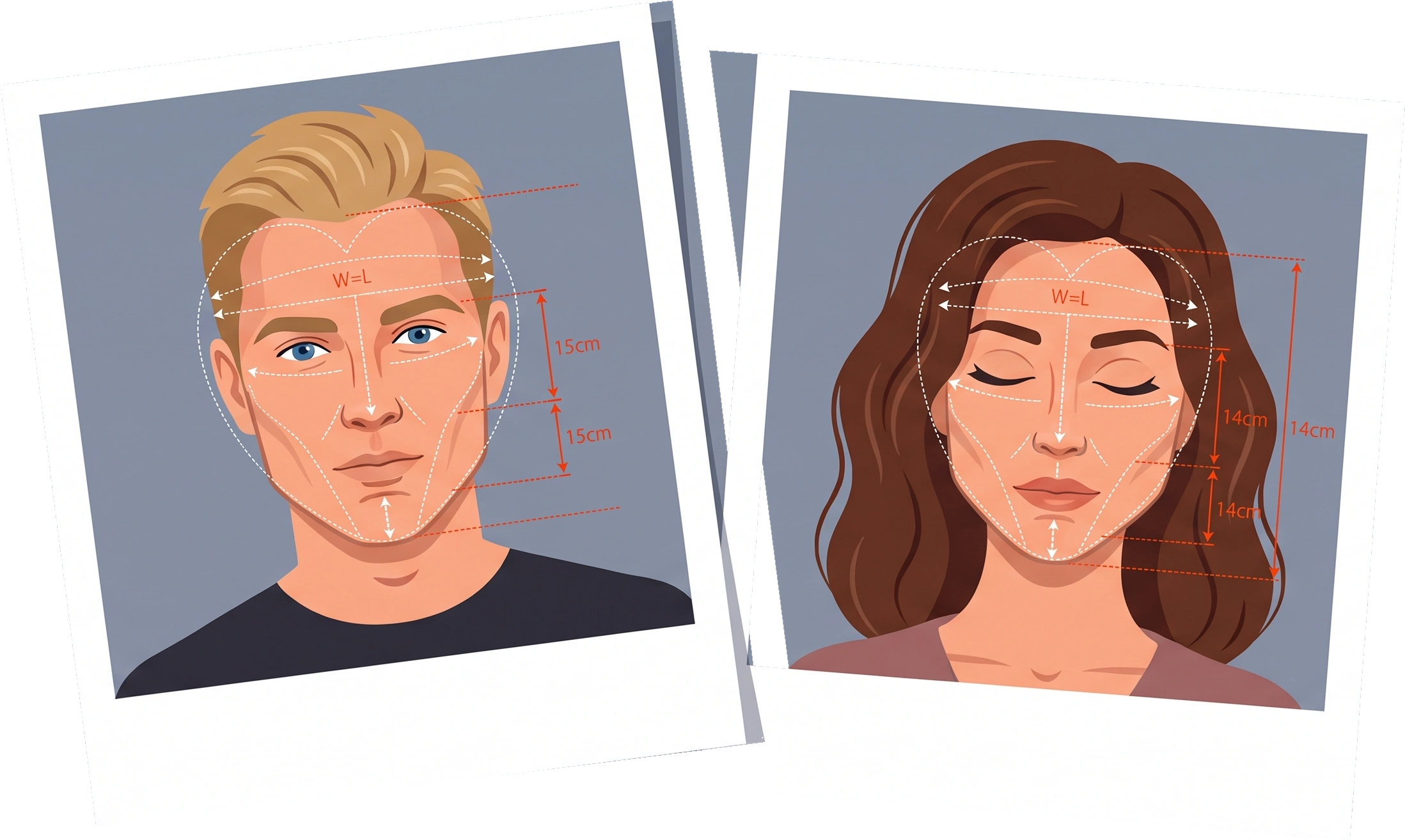
Heart Face Shape
Wide forehead and temples, gently tapering to an elegant, pointed chin.
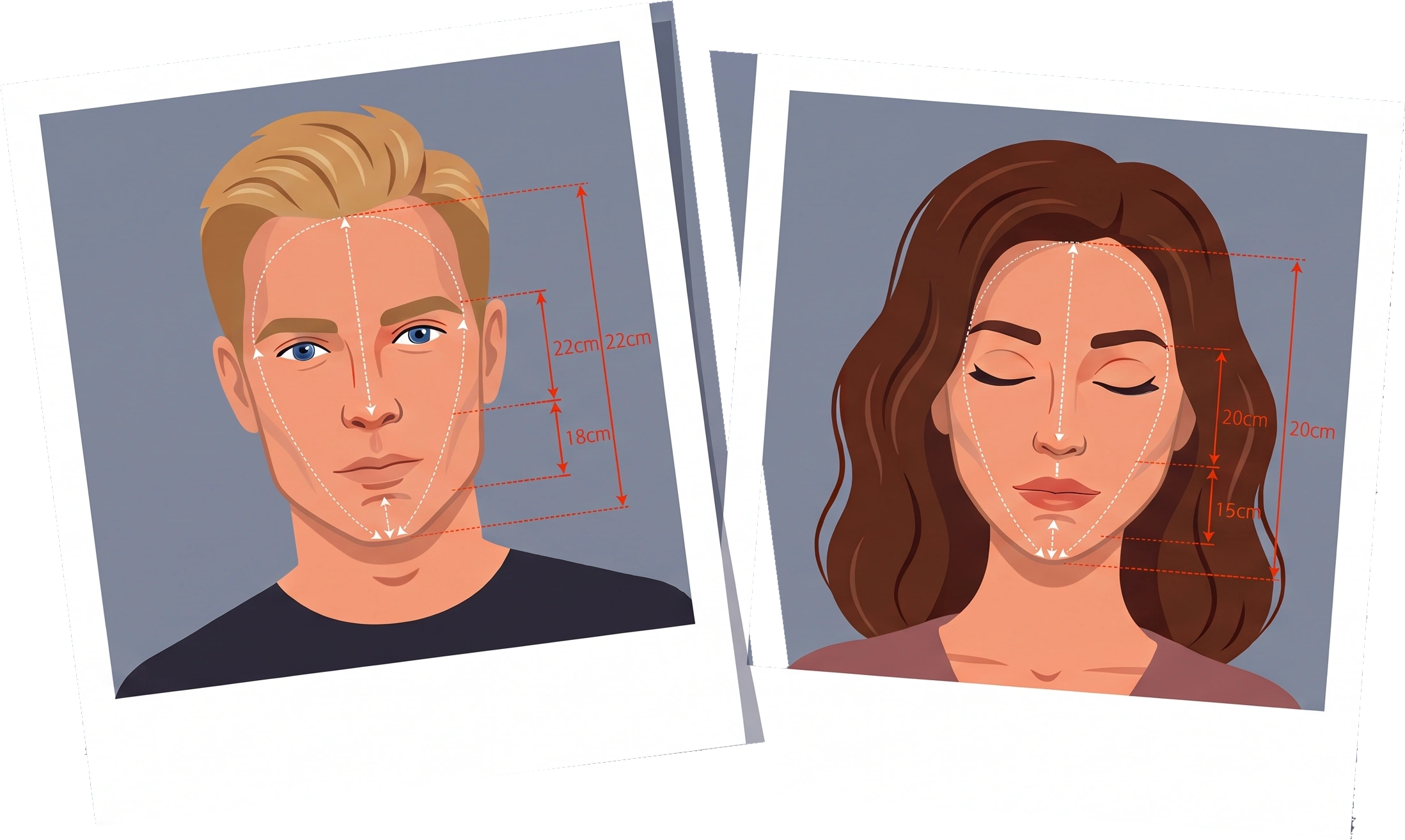
Oblong Face Shape
Noticeably longer than wide with straight, parallel cheek and jaw contours.
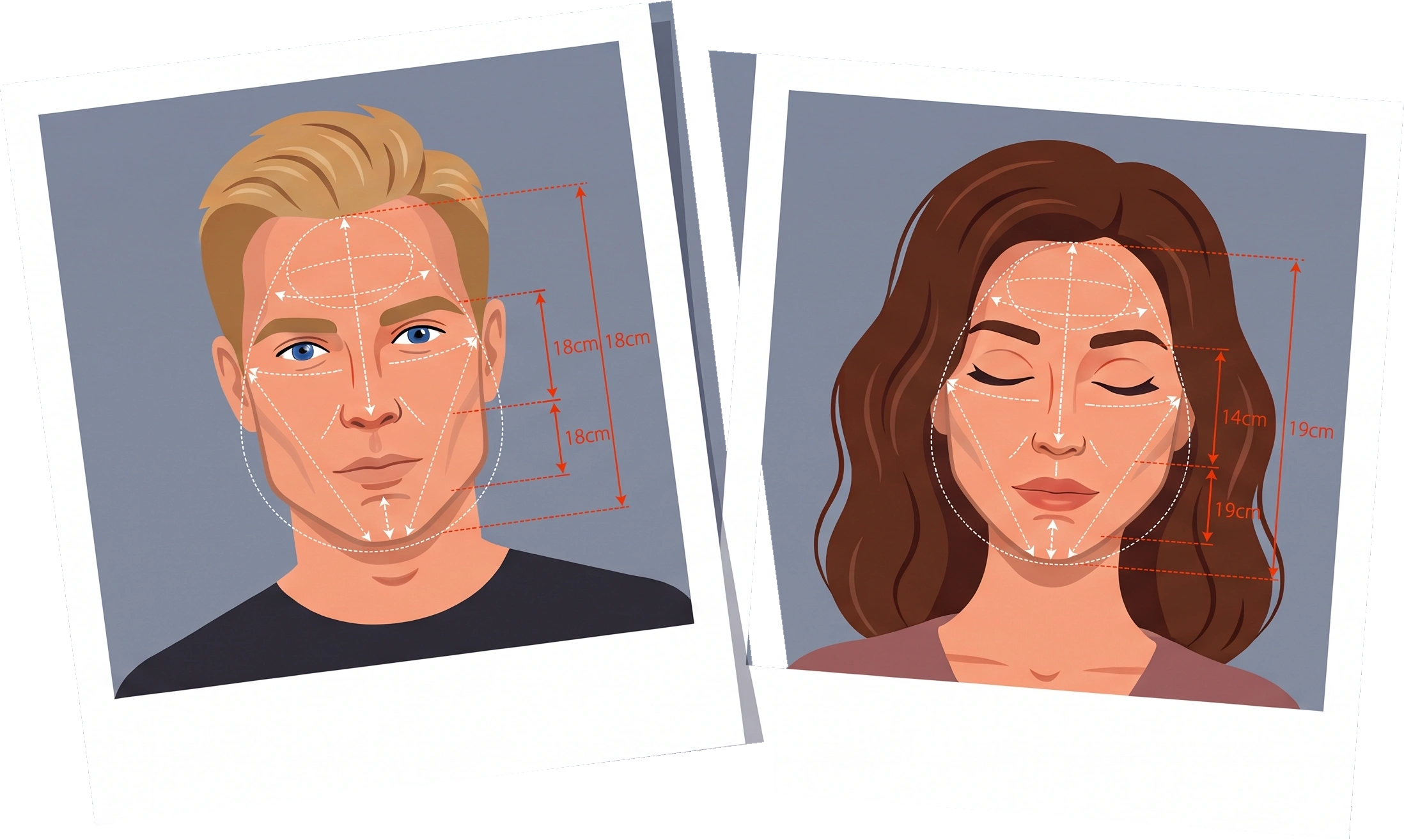
Triangle Face Shape
Strong, dominant jawline that tapers upward to a narrower forehead.
Face Shape Comparison Matrix
Compare key anthropometric dimensions across all 7 craniofacial profiles according to Farkas standards.
| Shape | Widest Point | Length : Width | Jawline Angle | Chin Architecture | Population Rarity | Guide |
|---|---|---|---|---|---|---|
| Oval | Cheekbones | 1.35 - 1.60 | Soft, curved | Smooth, rounded | 45% (Most common) | Details → |
| Diamond | Cheekbones (Rcheek > 1.10) | 1.35 - 1.65 | Tapered, narrow | Sharp, pointed | 8 - 10% (Rare) | Details → |
| Round | Cheekbones & Midface | < 1.25 | Circular, curved | Soft, rounded | 15 - 20% | Details → |
| Square | Equal (Forehead ≈ Jaw) | < 1.25 | Sharp, 90° gonial | Flat, broad | 12 - 15% | Details → |
| Heart | Forehead (Rtaper > 1.20) | 1.30 - 1.60 | Gradual taper | Delicate, pointed | 10 - 12% | Details → |
| Oblong | Uniform throughout | > 1.65 | Straight, parallel | Elongated, flat | 8 - 10% | Details → |
| Triangle | Jawline (Rtaper < 0.85) | 1.15 - 1.45 | Broad, prominent | Wide, squared/flat | 5 - 7% (Rare) | Details → |
Most Commonly Confused Face Shapes
How to tell closely matched facial geometries apart with objective biometric criteria.
Oval vs. Oblong
An oval face has an aspect ratio around 1.45–1.55 with soft taper. An oblong face has an aspect ratio exceeding 1.65 with parallel, straight sides and a longer chin-to-forehead drop.
Round vs. Square
Both share an aspect ratio under 1.25. However, round faces have curved, soft jawlines with zero sharp corners, whereas square faces have an unmistakable 90-degree angular jawline.
Heart vs. Triangle
A heart face is top-heavy (wide forehead tapering to a sharp chin, Rtaper > 1.20). A triangle face is inverted: bottom-heavy with a broad jawline tapering up to a narrower forehead (Rtaper < 0.85).